


DRAC Converter Pricing
DRAC LLC
When I first opened DRAC Converter, I understood its appeal almost immediately: it is built for a very specific automotive task rather than trying to be a general repair app. The application, developed by DRAC LLC, focuses on catalytic converter identification, with a catalog designed around codes, images, and purchasing. That narrow purpose is both its biggest strength and the main question behind its long-term value. If you regularly identify converters, the app can become a practical reference. If you only need that information once in a while, its usefulness depends heavily on how quickly it helps you reach a confident match.
My overall impression is that this is a specialist tool for people who already spend time around vehicles, parts, salvage operations, exhaust work, or converter purchasing. It is free to install, rated for Everyone, and runs on Android devices using version 5.0 or later. The current release is 2.1.2, and the app has passed the early novelty stage with more than ten thousand installs. Its average rating sits at 3.9 from roughly a hundred ratings, with several dozen written reviews, so the public response looks mixed but substantial enough to suggest that real users are applying it to practical situations.
What the first week feels like
The first week with a catalog like this is mostly about learning how to think with it. A normal web search often produces scattered results: marketplace listings, forum comments, photos from different angles, and part numbers that may be incomplete or formatted differently. DRAC Converter is more focused. Instead of beginning with a broad question about exhaust systems, I would use it when I already have a converter in front of me and need to narrow down its identity.
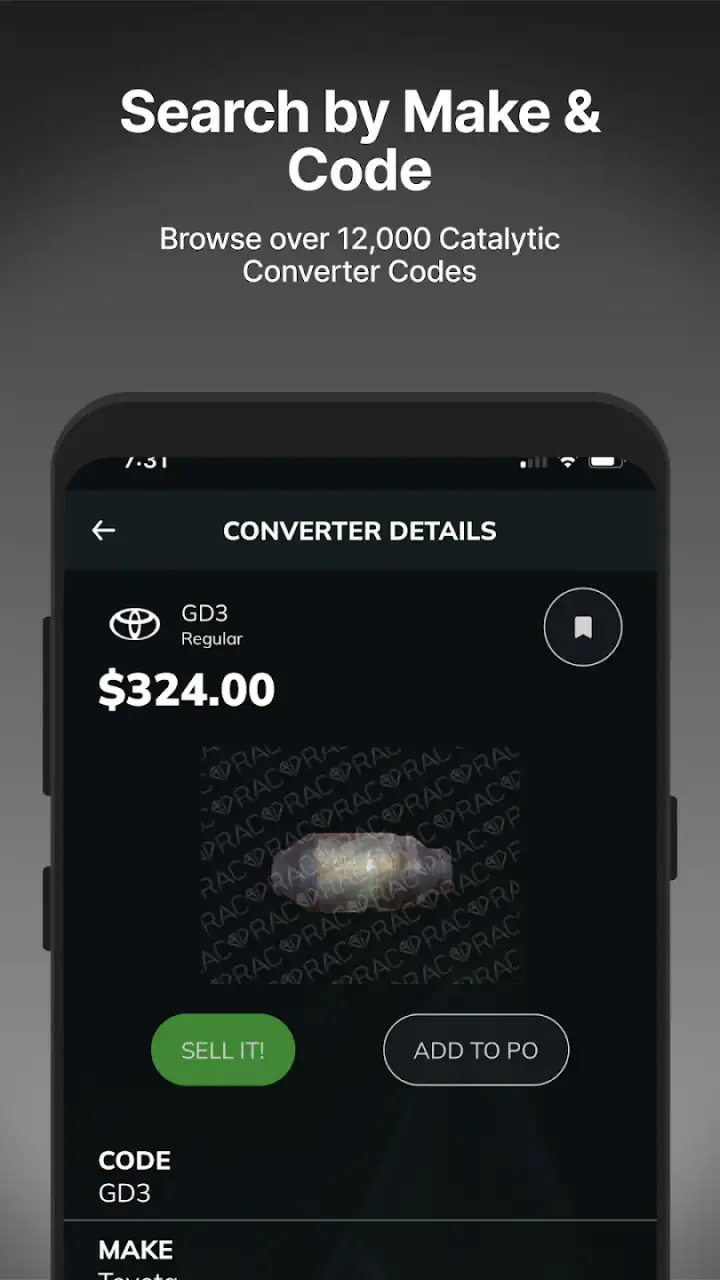
The combination of codes and images is especially important. A code alone can be difficult to interpret when markings are dirty, worn, stamped unevenly, or read in the wrong order. An image gives a second way to check the result. I would not treat the photograph as an automatic guarantee, but comparing the physical shape and visible markings is a much safer workflow than trusting a single text match.
That makes the app immediately useful in a yard, garage, workshop, or buying situation where time matters. Imagine finding a converter among removed parts and needing to decide whether it is worth investigating further. Instead of switching between a search engine, image results, and a seller page, you can start with a dedicated catalog. The benefit is not simply speed; it is having the code and visual reference considered together.
Related News

Why WhatsApp Messenger Still Makes Everyday Communication Feel Easy

Jurassic World: The Game Is the Better Dino Tycoon for Strategic Players

Threads in Real Life: Who Should Join, Lurk, or Leave

How SHEIN Turned Shopping Into an Endless Content Feed

How to Make Fortnite Feel Smarter on Mobile

Should You Switch to Microsoft Outlook on Mobile?
During the first few sessions, I would recommend testing the app with converters whose identity is already reasonably clear. That gives you a chance to learn how the catalog presents entries before relying on it for an uncertain or valuable part. It is also a good way to notice whether your reading of a stamped code is correct. A small habit like checking the same entry through both its text and image can prevent an avoidable mistake.
The purchasing element makes the application more than a static lookup book. It suggests a workflow that moves from identification toward obtaining or evaluating a part. That can be convenient for someone who handles repeated jobs, but it also means the app is not only about education. A user should still compare the identified item with the vehicle, the required fit, and the circumstances of the transaction. Identification and suitability are related, but they are not exactly the same decision.
The free entry point is helpful because it lowers the risk of trying a specialized catalog. At the same time, the presence of in-app purchases priced from around twenty dollars to around thirty dollars per item means the full experience may become a serious consideration for occasional users. I would not judge that cost in isolation. For a professional who avoids one wrong purchase or saves repeated research time, it may be reasonable. For someone curious about catalytic converters without an immediate job, it is harder to justify.
Gallery
Who gets the quickest benefit
The strongest early audience is someone who encounters converter codes repeatedly. That could include a parts buyer, a recycling or salvage worker, an exhaust specialist, or a vehicle owner handling several related repairs. These users can build a repeatable routine: inspect the marking, search the catalog, compare the image, and then decide whether to continue toward purchasing.
A single-car owner may still find value, particularly when a converter has been removed or its markings are difficult to interpret. However, the app is less likely to become a daily tool in that situation. The first-week appeal is therefore high for repeated identification and moderate for one-off curiosity. I would skip it if I wanted broad maintenance instructions, troubleshooting guidance, or a complete vehicle repair companion. Its focus is much narrower than that.
A practical workflow that avoids false confidence
One of the more useful ways to approach the catalog is to treat it as a verification step rather than an oracle. First, record every visible marking exactly as it appears, including letters that may look similar. Then compare the matching catalog entry with the physical converter. Look at the shape, connection points, and overall appearance instead of stopping at the first code that seems familiar.
After that, separate three questions: “What part does this resemble?”, “Does the code support that identification?”, and “Is it suitable for the vehicle or transaction I am considering?” The app is most valuable for the first two. The third still requires careful judgment and, where appropriate, information from the vehicle or the seller. This distinction is a non-obvious advantage of using a specialist catalog responsibly: it can improve identification without pretending to replace the entire decision.
Why it can remain useful month after month
The long-term value of DRAC Converter depends on repetition. A catalog app earns permanent space on my phone when it solves a recurring problem more cleanly than my browser history or saved screenshots. For someone who regularly handles converters, the searchable relationship between codes and images can become part of the normal inspection routine. The app does not need to be opened every day to be worthwhile; it needs to be dependable whenever a converter appears that is not immediately recognizable.
There is also value in consistency. Web searches change depending on wording, spelling, and the quality of available pages. A dedicated catalog gives repeated tasks a more stable starting point. That matters when several people in a workshop need to follow a similar process, because the conversation can begin from the same catalog entry instead of from unrelated search results.
Another lasting use case is building personal familiarity. After seeing many entries, I would expect the images and code patterns to become easier to recognize. The app can then work as a training aid, not because it replaces hands-on experience, but because it lets a user compare real parts with a structured reference. That makes it more useful for someone developing confidence than a random collection of online photos.
Still, monthly value has limits. A converter catalog is not the kind of app most people browse for entertainment or general learning. Its relevance rises and falls with the work in front of you. If several months pass without a related inspection, it may feel dormant. That is not necessarily a flaw; it is the natural trade-off of a highly specialized tool. I would keep it installed if my work repeatedly brought me back to converter identification, but I would not recommend it as an essential download for every driver.
The purchasing path can strengthen recurring value for professionals, especially when identification and sourcing happen in the same work session. It can reduce the need to move between separate references. Yet purchasing also raises the standard I would apply before committing money. A catalog match should be checked carefully, and I would want to understand the exact item and transaction before treating the app as the final authority.
How it compares with ordinary alternatives
The usual alternative is a search engine combined with marketplace listings, repair forums, and image searches. That approach is flexible and often free, but it can be messy. Results may mix different part families, use inconsistent terminology, or show images without enough context. DRAC Converter has the advantage when the task is specifically to identify a catalytic converter from a code and a visual reference.
General vehicle apps are better choices when the problem begins with symptoms, service intervals, fault codes, or step-by-step repair instructions. They may cover far more of the ownership experience, while this app concentrates on one component category. A general parts marketplace may also be better when the user already knows the exact part and simply wants to compare sellers. DRAC Converter makes more sense earlier in the process, when the identity of the converter itself is the uncertainty.
Printed catalogs and saved reference documents still have one practical advantage: they do not depend on opening an app at the moment of inspection. They can also be easier to share across a workbench. The mobile catalog wins when I need a portable reference and want codes and images together, but it should complement careful physical inspection rather than replace it.
The maintenance burden over time
The main maintenance burden is not daily upkeep; it is maintaining a disciplined identification habit. A user has to enter or read markings carefully, compare images, and resist the temptation to accept the first plausible result. That takes more effort than a casual web search, but the extra step is exactly where the app can earn its place.
There is also a financial maintenance question. The app itself is free, but individual in-app purchases fall in the range of roughly twenty to thirty dollars. That changes how I would use it. I would explore the free portion first, understand what the catalog can do for my particular work, and only then decide whether a paid item supports a repeated need. Someone who expects only one lookup should think carefully before paying, while a business that handles many converters can evaluate the cost against saved research time and reduced purchasing errors.
Keeping the app useful also means checking that the installed release remains current. The stated version is 2.1.2, so users should pay attention to updates through their normal app store rather than assuming that an older installation will always behave identically. I would also avoid relying on a single saved result for a high-stakes decision. Rechecking the code and image when the part changes hands is a simple habit that protects against misidentification.
Because the content is specialized, the app’s value is tied to the quality and breadth of its catalog. The catalog is described as covering more than twelve thousand codes, which is a substantial reference range for this narrow subject. Even so, a large catalog does not remove the need to inspect unusual, damaged, or poorly marked parts carefully. The more obscure the converter, the more important visual confirmation and independent fit checks become.
Where fatigue can set in
The first source of fatigue is repetition without a clear payoff. If every lookup still requires several manual checks, an occasional user may decide that a normal search is faster. The app is most comfortable when the user performs this task often enough to learn the layout and develop a repeatable process. Without that familiarity, the specialized interface may feel like another layer between the part and the answer.
The second is uncertainty around purchasing. The ability to move toward a purchase is useful, but it can also make the app feel less like a neutral reference and more like part of a buying decision. I would prefer to keep identification, compatibility, condition, and price evaluation as separate mental steps. Users who want a simple educational catalog may find the purchasing angle distracting.
A third issue is that the app’s narrow purpose can make it feel incomplete beside broader automotive tools. It will not be my first choice for diagnosing a warning light, planning routine maintenance, or learning how to remove an exhaust component. That is not a criticism of its core idea, but it is an important boundary. Installing it does not turn a phone into a complete workshop manual.
The rating of 3.9 suggests a reasonably useful but not universally smooth experience. I would read that as a reason to test the workflow personally rather than treating the app as an automatic recommendation for every vehicle owner. Specialist tools can be excellent for one audience and unnecessary for another. The right question is not whether the app covers all automotive needs; it is whether converter identification is a recurring enough problem in your work to justify a dedicated reference.
Who should keep it installed
I would keep DRAC Converter installed if I regularly buy, sort, inspect, or identify catalytic converters. In that setting, the app has a realistic chance of becoming part of a monthly routine. Its code-and-image approach is more purposeful than broad searching, and the purchasing connection may shorten the path from recognition to action.
I would also recommend trying it to a technically minded vehicle owner who has a specific converter question and is comfortable checking information carefully. The app can be valuable when a visible marking is the main clue. I would not recommend paying immediately, though. Start with the free access, test a known example, and decide whether the catalog fits your actual workflow.
I would skip it if I only wanted general car advice, a maintenance reminder, or a guide to diagnosing exhaust problems. I would also choose a broader parts or repair application if my main goal were comparing many kinds of vehicle components. This tool earns its space through depth in one area, not through breadth across automotive ownership.
My long-term verdict
After the initial novelty fades, DRAC Converter remains convincing only when catalytic converter work is part of your recurring routine. For that audience, it offers a focused reference that can make code reading and visual comparison more organized than ordinary searching. The more often I faced uncertain converter identification, the more likely I would be to appreciate having this catalog ready.
For everyone else, the case is weaker. The free installation makes experimenting easy, but the specialized purpose and possible in-app costs mean that casual users may not return often enough to gain lasting value. Its limitations are not hidden by broad promises: this is a converter catalog, not a complete automotive assistant.
My recommendation is therefore practical rather than universal. Try DRAC Converter if you handle these parts repeatedly, use the code-and-image comparison method instead of trusting a quick match, and treat purchasing as a separate decision that deserves its own checks. If that workflow becomes a habit, the app can justify permanent space on your phone. If your need is a single lookup or general vehicle support, a broader alternative will probably serve you better.
For the right user, the lasting appeal is simple: it turns a specialized inspection task into a repeatable mobile reference. That is enough to make it useful, but only when the task itself keeps coming back.
FAQs for DRAC Converter Pricing
What is DRAC Converter Pricing used for?
DRAC Converter Pricing is designed to help users review, calculate, or manage pricing information related to DRAC-compatible products and services. Before downloading, check the app’s current description and supported features, because pricing tools can vary depending on the product category, market, currency, and version. It is best suited to users who need quick access to organized pricing data rather than a general shopping application.
Is DRAC Converter Pricing free to download and use?
The application may be free to download, but some pricing functions, advanced tools, or complete data access could require an in-app purchase, subscription, or account. Store listings can change over time, so review the current Google Play or App Store information before installing. Also check whether the displayed price refers to the app itself, optional upgrades, or the products and services being evaluated.
Does DRAC Converter Pricing work on both Android and iOS?
Availability depends on the developer’s published versions and the region associated with your store account. Before downloading, confirm that the app is listed for your device, operating-system version, and screen format. If you use multiple devices, do not assume that an Android purchase automatically transfers to iOS, or that all features and account data will be identical across platforms.
Does DRAC Converter Pricing require an internet connection?
Some functions may work offline if the required pricing information is stored locally, while updated rates, synchronized account data, online catalogs, or cloud-based calculations may require an internet connection. From a practical standpoint, users should expect to connect periodically to receive current information. Avoid relying on an offline result for important purchasing decisions unless the app clearly confirms when its data was last updated.
Is the pricing information in DRAC Converter Pricing accurate and up to date?
The usefulness of any pricing converter depends on the source, update schedule, currency settings, and the way values are entered. Treat the app as a convenient reference rather than an absolute guarantee. Before making a purchase or financial decision, compare the result with the official supplier, current market listing, taxes, shipping charges, regional fees, and any discounts that may not be included in the app’s calculation.
Pros
- Simple pricing structure makes plan comparisons quick.
- Useful for checking conversion costs before starting a project.
- May help teams estimate budgets more accurately.
- Suitable for users who need occasional pricing calculations.
- Clear cost information can reduce unexpected expenses.
Cons
- Pricing details may change and require regular verification.
- Limited context may make complex quotes harder to evaluate.
- Users may need to contact support for custom requirements.
- Currency or regional differences could affect final costs.
- Not ideal for comparing unrelated converter services.


